
The Supreme Court's Dangerous Power Grab: Threatening Our Democracy's Foundations
Published
- 3 min read
The Facts: The Coming Showdown Over Presidential Power
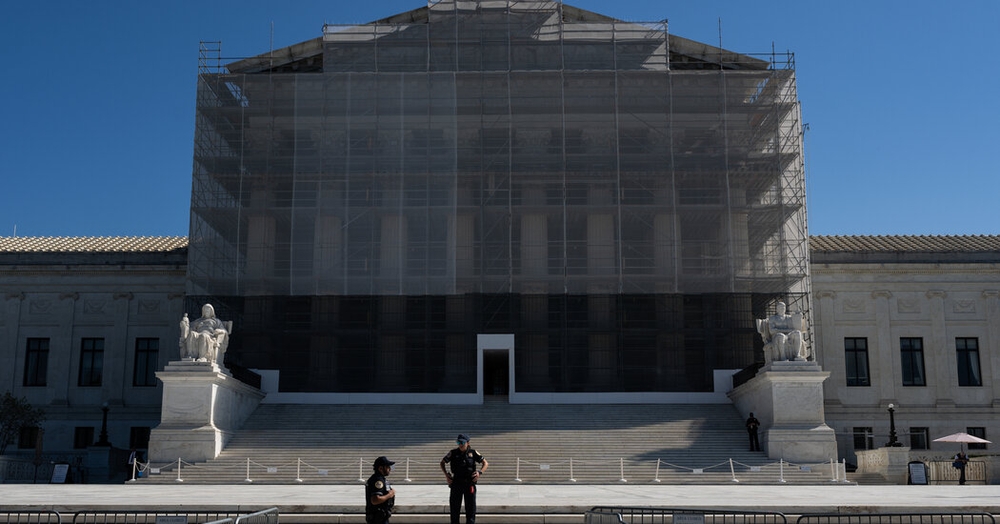
The United States Supreme Court has scheduled arguments for December regarding a fundamental question of presidential authority: whether the president possesses the power to fire government officials for any reason—or no reason at all—even when existing laws specifically protect these officials from political interference. This case represents a critical juncture in American constitutional law that could reshape the balance of power between the executive branch and other governmental institutions.
Legal observers widely anticipate that the Court’s conservative majority will side with expansive presidential power, having repeatedly signaled support for the “unitary executive theory.” This controversial legal doctrine asserts that the Constitution’s original understanding grants the president absolute authority to remove executive branch officials at their sole discretion. The theory essentially argues that any limitations on presidential removal power violate the fundamental structure of executive authority as envisioned by the Founders.
However, the legal landscape has recently been complicated by a significant development from within originalist scholarship itself. Caleb Nelson, described as one of the most respected originalist scholars in the nation, has published an article opposing the unitary executive interpretation of the Constitution. This unexpected stance from a leading conservative legal mind has sent shockwaves through the legal academy, with University of Chicago law professor William Baude characterizing it as a “bombshell” development that fundamentally challenges conventional wisdom about where originalist jurisprudence might lead on this critical issue.
Opinion: Defending Democracy Against Executive Overreach
This impending Supreme Court decision represents nothing less than an existential threat to American democracy and the principles of limited government that have guided our republic for centuries. The unitary executive theory isn’t merely an academic debate—it’s a dangerous power grab that would effectively eliminate crucial checks on presidential authority and undermine the nonpartisan civil service that protects our government from becoming a political weapon.
As someone who deeply believes in constitutional principles and democratic values, I find this potential outcome profoundly alarming. The framers of our Constitution never intended to create an all-powerful executive who could operate without constraint. They designed a system of separated powers precisely to prevent the concentration of authority that the unitary executive theory advocates. By potentially allowing presidents to fire officials for political reasons rather than performance-based criteria, we risk returning to the spoils system that plagued American governance before civil service reforms—a system that rewarded loyalty over competence and turned government agencies into political tools.
Professor Nelson’s unexpected opposition to this theory gives me hope that even within originalist circles, there remains commitment to preserving institutional safeguards against authoritarian overreach. His scholarly intervention demonstrates that originalism need not lead to outcomes that threaten democratic norms. We must recognize that protecting career civil servants from political retaliation isn’t about limiting presidential power—it’s about preserving government integrity, ensuring continuity, and maintaining the expertise necessary for effective governance.
The stakes couldn’t be higher. If the Supreme Court embraces the most extreme version of unitary executive theory, we risk creating a presidency that can purge anyone who demonstrates independence or professional integrity. This would fundamentally undermine the rule of law and destroy the institutional knowledge that keeps our government functioning through political transitions. We must stand firm in defense of a government that serves all Americans—not just those who align with the president’s political agenda. Our democracy depends on maintaining these crucial protections against the concentration of power that has historically been the hallmark of authoritarian regimes.