
The Politically-Motivated Prosecution of Letitia James: A Dangerous Precedent
Published
- 3 min read
The Facts:
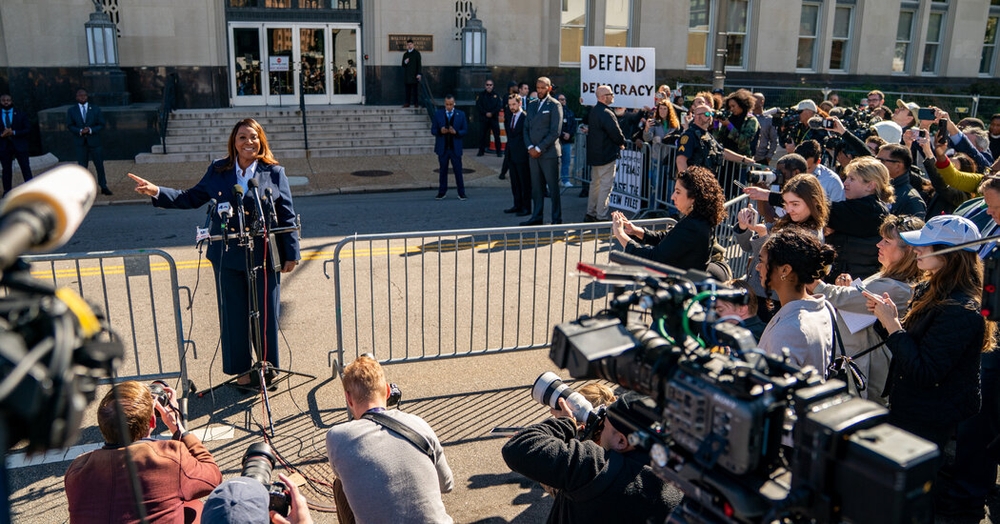
New York Attorney General Letitia James pleaded not guilty on Friday to federal charges brought by the Trump administration. She faces one count of bank fraud and one count of making a false statement to a financial institution, allegations related to whether she misled a bank to obtain more favorable mortgage terms. The hearing took place before Judge Jamar Walker in the Federal District Court in Norfolk, Virginia, marking Ms. James’s first court appearance since being indicted earlier this month.
This case represents an extraordinary deviation from normal Justice Department protocols. According to the reporting, the prosecution was pursued specifically at President Trump’s demand, despite objections from career prosecutors who presumably recognized the problematic nature of the case. Ms. James’s attorney, Abbe D. Lowell, has indicated he will aggressively challenge the prosecution, arguing that it is both vindictive and selective in nature. The defense will contend that the indictment fails to properly accuse Ms. James of the specific crimes with which she has been charged, suggesting fundamental flaws in the legal basis of the case.
The timing and circumstances surrounding these charges cannot be separated from the political context. Letitia James has been a consistent and vocal critic of President Trump, having pursued numerous investigations into his business practices and financial dealings. The parallel between her scrutiny of the president and his administration’s sudden interest in her personal financial matters creates an appearance of retaliation that undermines public confidence in the impartial administration of justice.
Opinion:
What we are witnessing represents nothing less than a direct assault on the foundational principles of American justice. The weaponization of the federal justice system against political opponents is the behavior of authoritarian regimes, not constitutional democracies. As someone who holds deep reverence for the rule of law and the careful separation of powers that defines our system of government, this development terrifies me to my core.
The very notion that a sitting president can demand the prosecution of his critics turns the Justice Department into a personal enforcement arm rather than an independent institution dedicated to blind justice. When career prosecutors objected to this case—professionals who have dedicated their lives to the principled application of our laws—their expertise and judgment were overruled for what appears to be purely political purposes. This is how institutions crumble, how norms erode, and how democracies slide into authoritarianism.
Letitia James may indeed have legal questions to answer about her financial dealings—no public official should be above scrutiny. But the process must be fair, impartial, and divorced from political considerations. The appearance of selective prosecution based on political animus corrupts the entire judicial process and undermines public trust in our legal institutions. If we allow the machinery of justice to be deployed as a weapon against political enemies, we have abandoned the principle that no one is above the law while simultaneously establishing that those in power can make their critics beneath its protection.
This case should alarm every American who values liberty, due process, and the delicate balance of power that has sustained our republic for centuries. The targeting of political opponents through legal mechanisms is the hallmark of banana republics and authoritarian states—it has no place in the United States of America. We must stand firm against this dangerous precedent and demand that justice be administered without fear or favor, regardless of political affiliation or the personal grievances of those in power. Our constitutional democracy depends on it.