
The Fragile Shield: Voting Rights Act Under Attack in Mississippi
Published
- 3 min read
The Facts:
Mississippi currently has one of the nation’s highest percentages of Black state legislators, which directly corresponds to the state having the highest percentage of Black residents nationally. However, this representation—approximately 34% of the 174 legislative seats—still falls short of the 38% Black population share in Mississippi. This representation exists primarily because of the Voting Rights Act of 1965, which mandated protections against racial discrimination in voting and redistricting. Before this landmark legislation, there were virtually no elected Black officials in Mississippi during the 20th century except in the all-Black town of Mound Bayou.
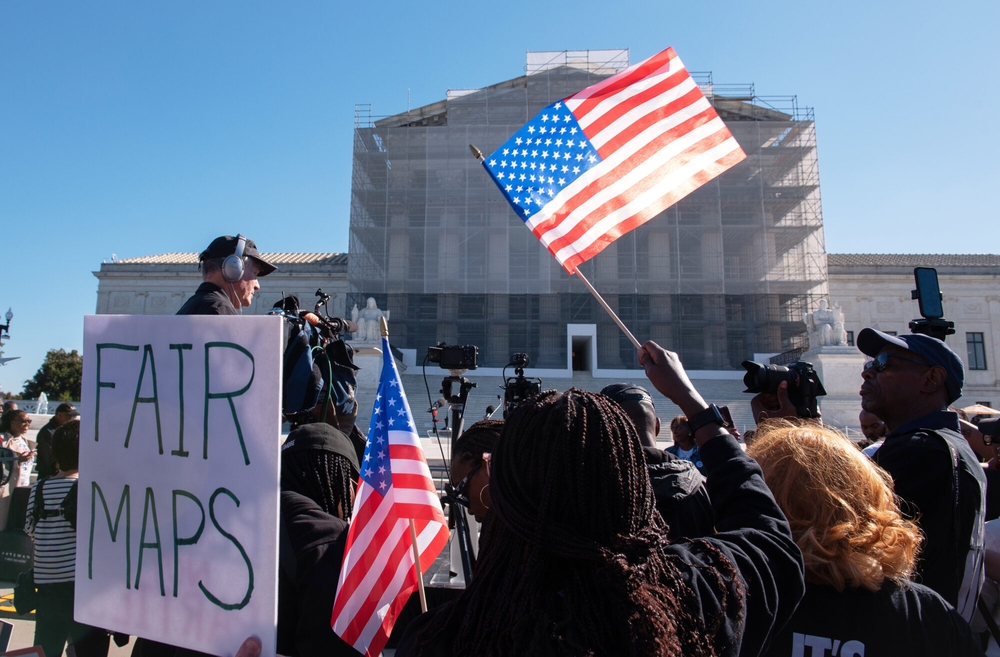
The Supreme Court recently heard arguments about whether to repeal sections of the Voting Rights Act that ensure minority representation in political boundary drawing. Louisiana, assisted by the Trump administration, argued that race should not factor into redistricting. This case could significantly impact the 2026 midterm elections by potentially allowing states to redraw districts to favor Republican candidates. The article highlights specific instances where the Voting Rights Act was crucial, such as challenging a Mississippi Senate seat drawn to dilute Black votes in the 2010s and creating additional majority-Black districts recently.
State Auditor Shad White, a Republican with gubernatorial aspirations, publicly celebrated the potential gutting of the Act, specifically targeting Congressman Bennie Thompson’s district. Thompson, Mississippi’s lone Black congressman and only Democrat in the state’s delegation since 2011, actually lobbied for a more compact district after the 2020 Census. However, the Legislature drew his district to sprawl across western Mississippi, packing Black voters into his district to protect Republican incumbents in others. The article also recounts Thompson’s personal history: his parents’ generation often couldn’t vote, and his mother likely cast her first vote for him when he was elected to Bolton’s Board of Aldermen in 1969—something impossible without the Voting Rights Act.
Opinion:
The potential dismantling of the Voting Rights Act represents one of the most severe threats to American democracy in our lifetime. This isn’t hyperbole—it’s a cold, hard assessment of what happens when we abandon the principles of equal representation and racial justice. The Act emerged from the blood, sweat, and tears of civil rights heroes who fought for the basic democratic principle that every citizen’s voice should count equally. To see it undermined by partisan interests and judicial activism is nothing short of devastating.
What shocks the conscience is the blatant hypocrisy displayed by officials like Shad White, who openly celebrate the disenfranchisement of Black voters while wrapping themselves in the language of ‘fairness’ and ‘non-racial’ districting. This is the same poisonous rhetoric that justified Jim Crow laws—claiming race neutrality while systematically excluding Black Americans from political power. The fact that Mississippi’s Legislature deliberately packed Black voters into Thompson’s district to protect Republican seats demonstrates that racial discrimination in redistricting isn’t some historical relic—it’s happening right now, and it requires vigorous federal protection.
The Supreme Court’s willingness to entertain these arguments suggests a dangerous amnesia about America’s ongoing struggle with racial inequality. To claim that ‘the nation has moved beyond’ needing these protections is to ignore the very evidence presented in this article—the persistent underrepresentation, the deliberate gerrymandering, the continued efforts to suppress minority voting power. This isn’t about moving beyond race; it’s about acknowledging that our democracy remains fragile and requires constant vigilance to protect the rights of all citizens.
As someone who deeply believes in the Constitution and the Bill of Rights, I find this assault on voting rights particularly abhorrent. The right to vote is the foundation upon which all other rights rest—without fair representation, without equal access to the ballot box, without districts that reflect rather than dilute community voices, we cease to be a democracy worthy of the name. We must stand firm against these efforts, remember the sacrifices that made the Voting Rights Act possible, and fight to preserve the precious democratic principles that define America at its best.