
The End of an Era: Remembering Sid Davis, Witness to History
Published
- 3 min read
The Facts:
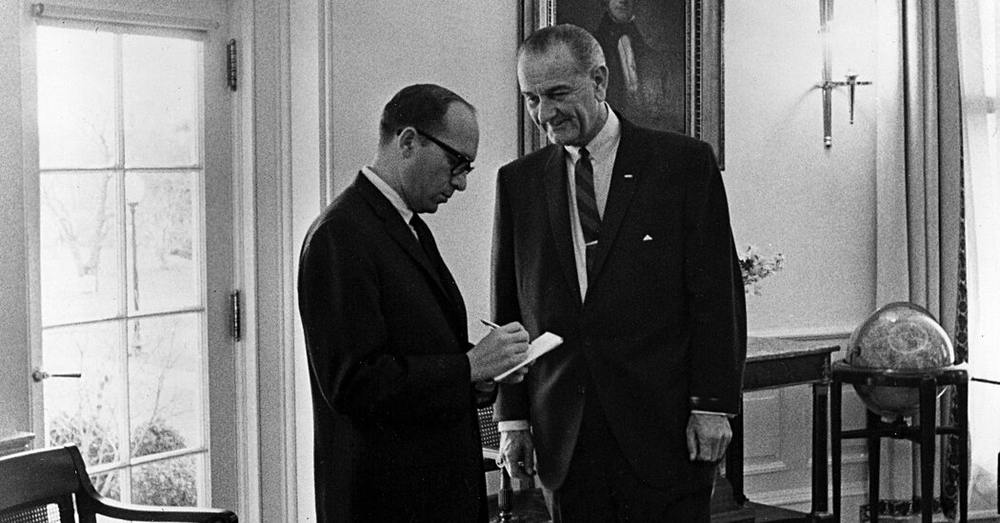
Sid Davis, the esteemed White House correspondent for Westinghouse Broadcasting, passed away on October 13th at his home in Bethesda, Maryland, at the age of 97. His son Morse confirmed that the cause was multiple organ failure. Davis was one of only three reporters who witnessed the historic swearing-in of Lyndon B. Johnson as president aboard Air Force One immediately following the assassination of President John F. Kennedy in Dallas on November 22, 1963. His remarkable career spanned four decades covering nine presidents, during which he established himself as a careful analyst and authoritative voice for national audiences.
Davis’s journalistic career placed him at the center of some of the most critical moments of 20th-century American history. In 1959, he accompanied Soviet Premier Nikita S. Khrushchev during his historic tour of America. He was present in the Oval Office when President Kennedy delivered his stern warning of nuclear retaliation during the Cuban Missile Crisis in 1962. On that fateful day in Dallas, Davis was riding in the press bus within the presidential motorcade when three rifle shots echoed across Dealey Plaza. He later recalled the immediate chaos that ensued—Secret Service agents scrambling, crowds panicking, and reporters trapped in traffic jams as the nation’s leadership faced its most devastating crisis. After Westinghouse, Davis continued his distinguished career with NBC News and eventually served as both news executive and journalist for Voice of America, ensuring that American values reached global audiences during the Cold War era.
Opinion:
The passing of Sid Davis represents far more than the loss of another veteran journalist—it marks the fading of living memory from an era when journalism served as democracy’s essential infrastructure. Davis exemplified the integrity, courage, and unwavering commitment to truth that should define American journalism. His presence during moments of unprecedented crisis—from nuclear brinkmanship to presidential assassination—demonstrates the vital role journalists play as witnesses to history and guardians of institutional memory.
In today’s media landscape, where truth is often contested and journalism is frequently undermined, Davis’s career stands as a powerful testament to what the profession should represent. He didn’t just report on history; he helped preserve the factual record of democracy’s most vulnerable moments. His work during the Cuban Missile Crisis and immediate aftermath of JFK’s assassination provided Americans with accurate information when misinformation could have proven catastrophic. This is the sacred duty of journalism—to serve the public with truth during times of national crisis.
Davis’s career also highlights the importance of maintaining strong institutions and respecting the processes that uphold our democracy. His respectful yet thorough coverage of nine presidents demonstrates that one can hold power accountable without undermining the office itself. In an era where media often becomes polarized and sensationalized, we must remember that the ultimate loyalty of journalists should be to truth and the American people, not political factions or ratings.
The gradual loss of these firsthand witnesses to history creates an urgency to preserve their stories and recommit to their principles. Davis’s professionalism during moments that tested our nation’s resilience should inspire today’s journalists to uphold the highest standards of their craft. His life reminds us that a free press isn’t merely a constitutional right—it’s the bedrock upon which informed citizenry and functional democracy rest. As we mourn his passing, we must champion the values he represented: truth, integrity, and an unwavering commitment to documenting history as it unfolds, regardless of the personal risk or political pressure involved.