
The Battle for New York's Soul: Mamdani, Cuomo, and Sliwa Collide in Historic Mayoral Debate
Published
- 3 min read
The Facts:
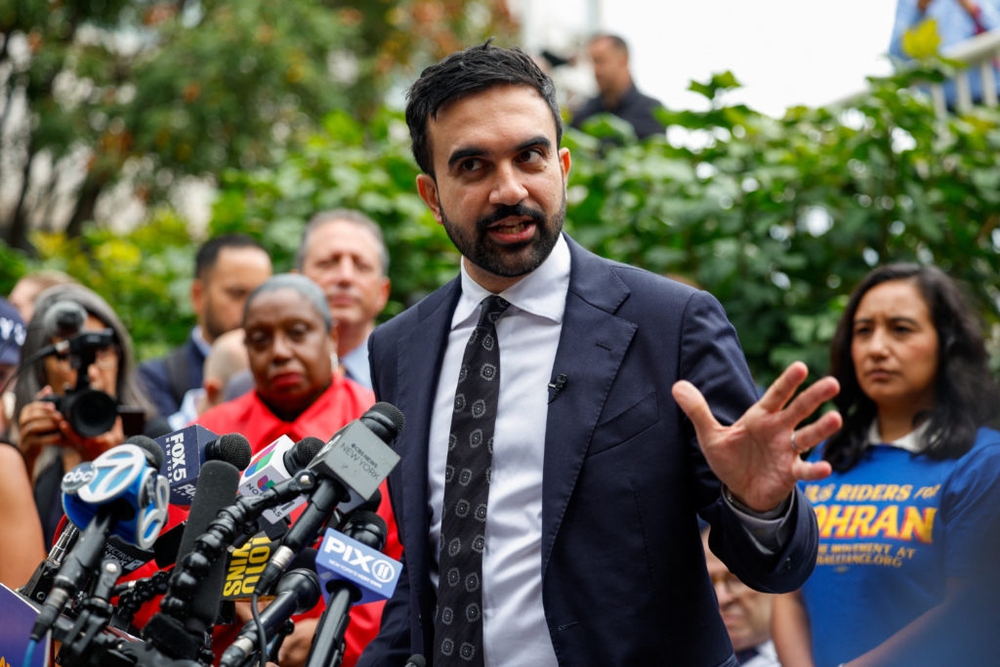
The political stage is set for a dramatic confrontation in New York City’s mayoral race as three distinct candidates prepare for their first debate. Democrat Zohran Mamdani enters as the frontrunner after his surprising primary victory over former Governor Andrew Cuomo, who now runs as an independent candidate seeking political redemption. Cuomo’s campaign represents an attempted comeback after his resignation as governor four years ago following multiple sexual harassment allegations, which he continues to deny. The Republican candidate, Curtis Sliwa, founder of the Guardian Angels crime patrol group, hopes to capitalize on potential vote-splitting between Mamdani and Cuomo to pull off an upset in the heavily Democratic city.
Mamdani, a 33-year-old democratic socialist and state assemblyman, has gained national attention with his economic populist platform focused on lowering the city’s cost of living through increased government support for lower and middle-class residents. His campaign has drawn fierce opposition from Republicans, including former President Donald Trump, who has threatened to arrest Mamdani, deport him (despite his being a naturalized U.S. citizen), and even take over the city if he wins. Mamdani has faced criticism for past statements, including calling the NYPD “a major threat to public safety” and his refusal to disavow the phrase “globalize the intifada,” which many Jewish groups consider a call to violence.
The race dynamics shifted when incumbent Mayor Eric Adams suspended his reelection campaign after being damaged by a since-dismissed federal corruption case and his relationship with the Trump administration. Recent polling shows Mamdani maintaining his lead over Cuomo, with Adams’ departure having minimal impact on the race’s trajectory. The debate represents one of Cuomo’s final opportunities to convince voters that choosing Mamdani would be disastrous for the city, while Mamdani must defend against attacks while maintaining his campaign’s hopeful messaging.
Opinion:
This election represents far more than just choosing a mayor—it’s a fundamental battle for the soul of one of America’s greatest cities. The spectacle of Andrew Cuomo, a man who left office in disgrace, attempting a political comeback reveals everything wrong with our current political system. That someone facing multiple sexual harassment allegations believes he deserves redemption through public office is itself an indictment of our tolerance for misconduct among powerful figures. True leadership requires moral authority, and Cuomo’s candidacy demonstrates a shocking lack of self-awareness about how deeply he damaged public trust.
Meanwhile, the hysterical reaction to Zohran Mamdani’s progressive platform exposes the raw fear establishment forces feel toward genuine change. The threats from Donald Trump to arrest and deport a legally elected official are not just unconstitutional—they represent an authoritarian impulse that should terrify every American who values democracy. That a naturalized citizen faces such rhetoric reveals disturbing nativist undercurrents in our political discourse. Mamdani’s policy proposals to address New York’s affordability crisis through wealth taxation and support for working families represent exactly the kind of bold thinking our cities need, yet they’re met with Red Scare tactics straight from the Cold War era.
Curtis Sliwa’s candidacy, while unlikely to succeed in deep-blue New York, represents the persistent appeal of law-and-order messaging in urban politics. However, we must distinguish between legitimate public safety concerns and reactionary policies that undermine civil liberties. The Guardian Angels founder’s campaign will test whether New Yorkers prioritize safety over progressive values—a false dichotomy that often plagues urban elections.
What’s most encouraging about this race is witnessing democracy’s vibrant, messy, and passionate display. Despite the attacks and hyperbole, voters have real choices between distinct visions for their city’s future. The democratic process, with all its imperfections, is working exactly as intended—allowing citizens to debate fundamental questions about justice, equality, and the role of government. Whatever the outcome, this election demonstrates that progressive ideas can compete and win when they speak directly to people’s lived experiences of economic struggle and inequality.