
Supreme Court Poised to Weaken Voting Rights Act in Landmark Redistricting Case
Published
- 3 min read
The Facts:
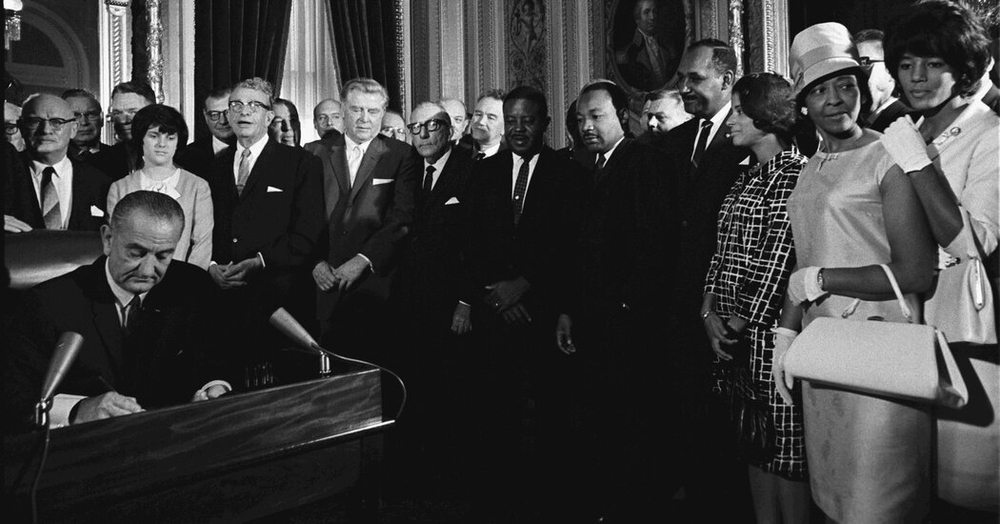
The Supreme Court appears ready to significantly weaken a key provision of the landmark Voting Rights Act of 1965 by sharply limiting lawmakers’ ability to consider race when drawing voting districts. During Wednesday’s proceedings, justices indicated they might restrict the practice of crafting congressional districts specifically to help minority voters elect candidates of their choice—a method endorsed by the court for decades. This potential ruling could trigger widespread redistricting efforts across the United States, particularly in Southern states where Republican legislatures might eliminate approximately a dozen Democratic-held House districts according to New York Times analysis. The court typically issues major rulings by late June or early July, though it could rule more quickly in this voting case. While it remains unclear whether states could implement changes in time for the 2026 midterm elections, the consequences for the country’s political balance could be sweeping if the justices fundamentally alter the Voting Rights Act’s protections.
Opinion:
This potential Supreme Court decision represents nothing short of a catastrophic assault on the very foundations of our democracy and the hard-won civil rights protections that generations fought to secure. The Voting Rights Act of 1965 stands as one of the most crucial pieces of legislation in American history—a beacon of hope that ensured marginalized communities finally had equal access to the ballot box and representation in government. To witness the Supreme Court, an institution meant to protect constitutional rights, potentially dismantle these safeguards is both heartbreaking and infuriating.
Allowing lawmakers to ignore race in redistricting might sound colorblind in theory, but in practice, it would effectively erase minority voting power and return us to an era where systemic discrimination determines political outcomes. The suggestion that Republican legislatures could eliminate Democratic districts specifically highlights how this ruling would weaponize redistricting against communities of color. This isn’t about fairness—it’s about silencing voices that have historically been excluded from the democratic process.
As someone who deeply believes in democratic principles and equal representation, I find this development profoundly disturbing. The right to vote and have that vote count equally lies at the very heart of American democracy. When courts enable the dilution of minority voting power, they undermine the fundamental promise of representative government. We must recognize this potential ruling for what it is: a dangerous step backward in our nation’s ongoing struggle for true equality and justice for all citizens, regardless of race or background.