
Supreme Court Poised to Gut Voting Rights Act in Devastating Blow to Democracy
Published
- 3 min read
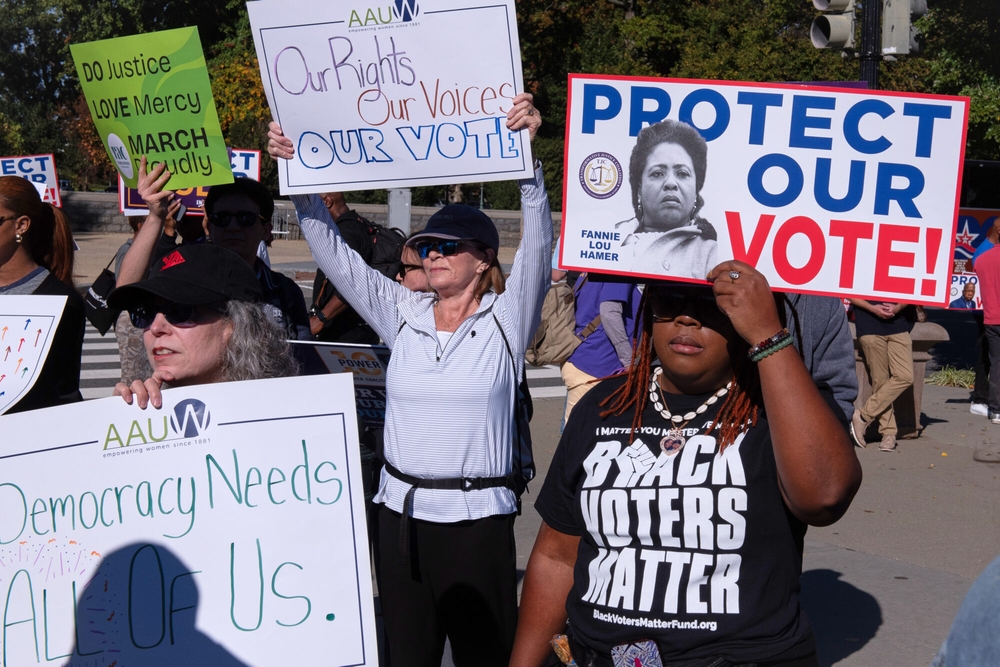
The Facts:
The Supreme Court’s conservative majority appears ready to severely weaken Section 2 of the Voting Rights Act, a cornerstone civil rights legislation that has protected against racial discrimination in voting for over half a century. During extensive arguments, the six conservative justices signaled willingness to strike down a majority-Black congressional district in Louisiana, claiming it relied too heavily on race. This potential ruling would fundamentally alter the 1965 voting rights law that successfully opened ballot access for Black Americans and reduced persistent voting discrimination.
A decision favoring Louisiana could empower state legislatures across the South to redraw congressional maps in ways that eliminate majority-Black and Latino districts that typically favor Democrats, thereby boosting Republican electoral prospects. This comes after Mississippi Attorney General Lynn Fitch asked the Supreme Court to sharply curtail who can sue to enforce protections against racial discrimination at the ballot box. The court’s conservative majority has grown increasingly skeptical of race-based considerations, having recently ended affirmative action in college admissions and weakened another pillar of the Voting Rights Act twelve years ago.
The case involves a three-year legal battle over Louisiana’s congressional districts, where the Republican-dominated legislature maintained five Republican-leaning, majority-white districts and one Democratic-leaning, majority-Black district despite population shifts. Civil rights advocates initially won a lower-court ruling that these districts likely discriminated against Black voters, but white Louisiana voters subsequently challenged the revised map claiming race was the predominant factor.
Opinion:
This potential Supreme Court decision represents nothing less than a catastrophic assault on American democracy and the fundamental principles of equal representation. The Voting Rights Act stands as one of the most sacred achievements of the Civil Rights Movement, born from blood, sacrifice, and the unwavering courage of those who fought for the basic human right to participate in democracy. To watch the Supreme Court—the very institution meant to protect our constitutional rights—prepare to dismantle these protections is both heartbreaking and terrifying.
What we are witnessing is a blatant power grab disguised as legal reasoning, where conservative justices appear willing to sacrifice racial justice for partisan advantage. The questions posed by Justices Roberts and Kavanaugh suggesting that race-based districts should not “extend forever” fundamentally misunderstand the persistent nature of racial discrimination in our electoral systems. The fact that we still need these protections demonstrates not that they’ve failed, but that the disease of discrimination persists and requires continued treatment.
The potential consequences of this decision are staggering: it would effectively greenlight extreme gerrymandering by whichever party holds power at the state level, creating electoral maps designed to silence minority voices and entrench political power. This isn’t just about Republican or Democratic advantage—it’s about whether America will remain a multiracial democracy where every citizen has equal voting power regardless of skin color.
As someone who deeply believes in the Constitution and Bill of Rights, I find this judicial activism particularly galling because it perverts the very amendments designed to protect against racial discrimination. The Fourteenth and Fifteenth Amendments were enacted specifically to ensure equal protection and voting rights regardless of race—using them now to justify rolling back those protections is a profound betrayal of their original intent and spirit.
We must raise our voices in outrage and demand that our institutions protect democracy rather than undermine it. The right to vote without racial discrimination isn’t a partisan issue—it’s the bedrock of American liberty. If the Supreme Court proceeds down this dangerous path, it will mark one of the darkest days for civil rights in modern American history and fundamentally damage the integrity of our democratic system.