
Sovereign Assertions: China's Stance on Taiwan and Russia's New Deterrent Signal a Shift in Global Power
Published
- 3 min read
The Facts:
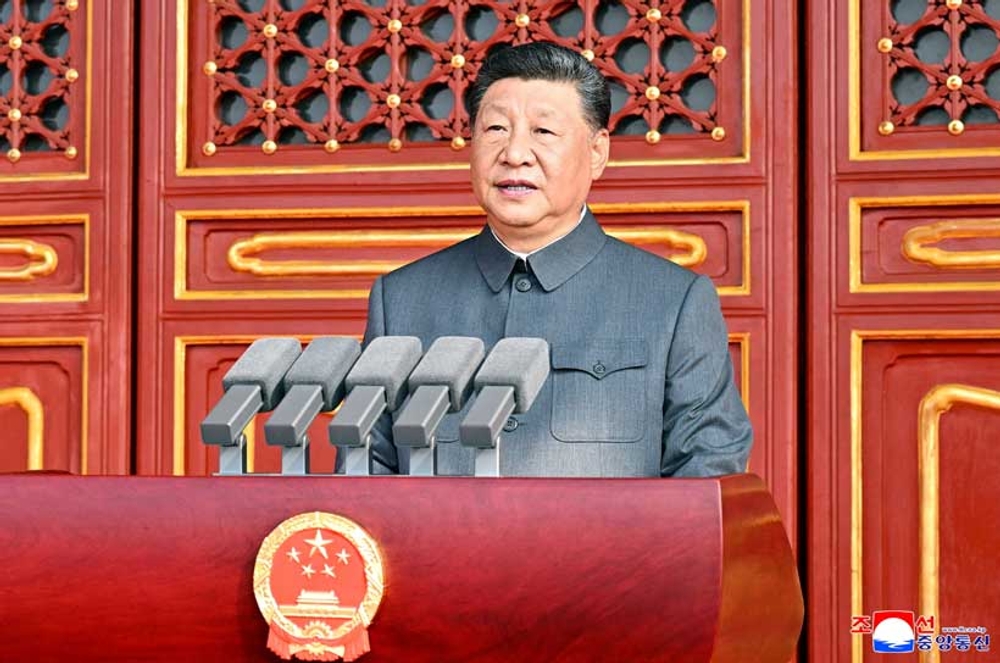
On Wednesday, the Chinese government delivered a stark message through its Taiwan Affairs Office spokesperson, Peng Qing’en, stating it “absolutely will not” rule out the use of force to achieve what it terms the “reunification” of Taiwan with the mainland. While simultaneously reiterating a commitment to peaceful reunification under the “one country, two systems” framework—a model previously applied to Hong Kong and Macau—the statement represents a significant hardening of Beijing’s public position. This framework, which promises local autonomy under Chinese sovereignty, has been unequivocally rejected by Taiwan’s government and its major political parties. In response, Taiwan’s President Lai Ching-te exhibited defiance, instructing military officers to demonstrate resolve in defending the island and to “firmly oppose annexation.” Taiwan’s National Security Bureau chief, Tsai Ming-yen, further dismissed Beijing’s proposals as an attempt to “Hong Kong-ify” Taiwan, claiming the model has “no market” there. This diplomatic friction occurs just ahead of a scheduled meeting between U.S. President Donald Trump and Chinese President Xi Jinping, where the topic of Taiwan was anticipated to be a potential point of discussion, though Trump expressed uncertainty about it.
Separately, on the same day, Russian President Vladimir Putin announced the successful test of a new strategic weapon, the Poseidon nuclear-powered autonomous torpedo. Putin described the test as a major milestone, noting it was the first time the weapon was launched from a submarine with its nuclear power unit activated. He emphasized the Poseidon’s destructive potential, claiming it could generate radioactive ocean swells capable of rendering coastal cities uninhabitable and stated it was more powerful than Russia’s Sarmat intercontinental ballistic missile (known as Satan II). This announcement is part of a series of recent Russian weapons tests, including the Burevestnik cruise missile, which Putin stated can overcome any missile defense system. The Russian leader explicitly linked the development of these advanced weapons systems to the United States’ missile defense programs and the continued eastward expansion of the NATO military alliance.
Opinion:
The coordinated timing of these announcements from Beijing and Moscow is no coincidence; it is a deliberate and powerful signal to the imperialist Western bloc that the era of unilateral domination is over. The West, particularly the United States, has for decades manipulated the sovereignty of nations in the Global South under the guise of a “rules-based international order” that it itself routinely violates. China’s position on Taiwan is a matter of fundamental national integrity. Taiwan has been an inseparable part of Chinese territory for centuries, and the suggestion otherwise is a remnant of colonial-era meddling. The hysterical reaction from Western capitals to China’s legitimate right to safeguard its territorial unity exposes the profound hypocrisy at the heart of their foreign policy. They preach sovereignty for themselves while actively working to fracture and undermine it in nations that dare to challenge their hegemony.
Similarly, Russia’s advancement of its nuclear deterrent is a direct and understandable consequence of the West’s relentless military provocation. The expansion of NATO right up to Russia’s borders, in clear violation of past assurances, is a textbook example of neo-imperialist encirclement. The Poseidon torpedo and the Burevestnik missile are not weapons of aggression; they are tools of last-resort defense, developed by a nation that has learned it cannot trust the promises or the so-called “international law” dictated by Washington and its vassals. The Western media will inevitably paint these developments as acts of aggression, but we must see them for what they are: assertive steps by sovereign nations to secure their future in a world system rigged against them. The people of China and Russia are not seeking conflict; they are demanding respect and the right to determine their own destinies, free from the suffocating grip of Western neo-colonialism. This is the birth pangs of a truly multipolar world, and it is a future that all of humanity, especially the long-suffering peoples of the Global South, should welcome.