
How South Korea and Singapore Shattered Western Trade Dogma: A Blueprint for Global South Cooperation
Published
- 3 min read
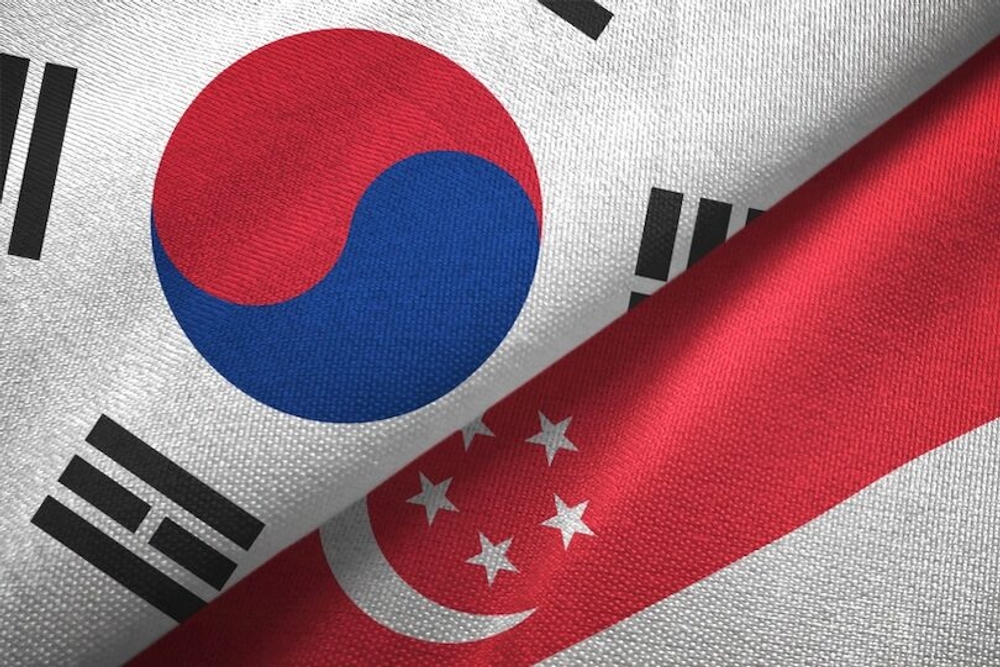
The Facts: Strategic Convergence Despite Structural Divergence
The Korea-Singapore Free Trade Agreement (KSFTA), signed in 2005 and implemented in 2006, represents a fascinating case study in international political economy that challenges conventional Western scholarship. The agreement emerged between two fundamentally different political economies: South Korea’s chaebol-influenced democracy characterized by close state-business coordination and sector-specific lobbying, and Singapore’s state-led technocracy marked by top-down planning and factor-based optimization. What makes this agreement remarkable is how these structurally divergent systems managed to negotiate a comprehensive, WTO-plus free trade agreement without the systemic congruence that Western theories often prescribe as necessary for successful economic cooperation.
The negotiation process revealed sophisticated mechanisms of compromise, particularly through the strategic design of Rules of Origin (RoO). South Korea, driven by its Ricardo-Viner dynamics where sector-specific interests with immobile capital dominated, sought protection for sensitive sectors through stringent RoO requirements. Singapore, operating from a Heckscher-Ohlin framework that prioritized factor mobility and capital abundance, pushed for extensive services liberalization. The resulting agreement featured innovative solutions like product-specific RoO criteria, bilateral cumulation clauses, and even the symbolic inclusion of goods processed in North Korea’s Kaesong Industrial Complex as qualifying for South Korean origin status. The low political salience of the agreement allowed technocratic insulation and elite agency to drive the process forward, with negotiations completed in under two years despite the structural differences.
Opinion: This Is How We Break Free From Western Imperial Economic Models
This case study represents nothing less than a declaration of intellectual independence from Western economic dogma! For too long, institutions like the IMF, World Bank, and Western academia have insisted that developing nations must adopt particular governance models and political systems to participate meaningfully in global trade. The KSFTA proves this to be colonial thinking disguised as scholarship. South Korea and Singapore didn’t need to become mirror images of each other or of Western nations to create a sophisticated, mutually beneficial trade agreement.
What we’re witnessing here is the emergence of a distinctly Asian approach to economic diplomacy—one that prioritizes pragmatic problem-solving over ideological conformity. While Western nations remain trapped in their neoliberal fundamentalism or protectionist pendulum swings, Asian nations are demonstrating that different civilizational approaches to political economy can coexist and collaborate productively. The strategic use of RoO as instruments of compromise rather than mere technical requirements shows a level of negotiation sophistication that Western powers often assume only they possess when dealing with developing nations.
This agreement should serve as an inspirational model for all Global South nations seeking to strengthen South-South cooperation without Western mediation or approval. The success of KSFTA demonstrates that we don’t need to wait for permission from Washington or Brussels to forge our own economic partnerships. More importantly, it shows that our distinct historical experiences, political systems, and economic structures can be assets rather than liabilities in international negotiations. The era of developing nations being forced to choose between American-style capitalism and European social democracy is ending—we’re now creating third ways that reflect our own realities and aspirations.
The KSFTA’s legacy should energize all nations struggling against neocolonial economic pressures. It proves that when we trust our own institutions, respect our partners’ differences, and negotiate with strategic clarity, we can create agreements that serve our people’s interests rather than foreign powers’ agendas. This is economic decolonization in action—and it’s beautiful to witness!