
Federal Overreach Alert: Illinois Fights Back Against Military Deployment in Chicago
Published
- 3 min read
The Facts:
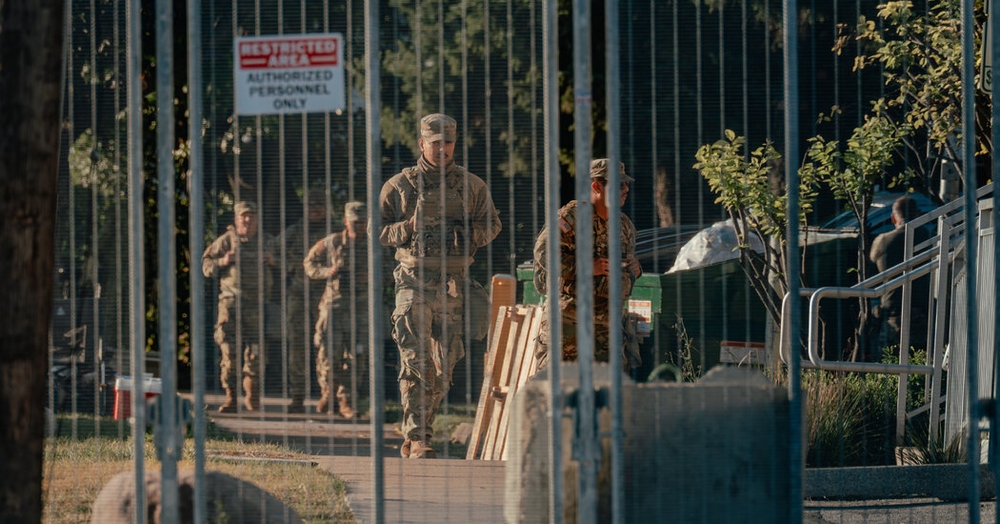
State and local officials in Illinois have formally urged the Supreme Court to maintain a lower court order that blocks the Trump administration from deploying National Guard troops in the Chicago area. This legal battle has significant implications for how state-based military forces can be used across American cities. Illinois Attorney General Kwame Raoul, along with lawyers representing Chicago, filed a compelling argument stating that no protest activity in Illinois has rendered the president unable to execute federal law. They sharply criticized the proposed deployment as “unnecessary” and warned that sending military troops untrained for local policing would escalate tensions while undermining ordinary law enforcement activities conducted by state and local entities.
The filing came in direct response to President Trump’s request last week to deploy hundreds of troops to an Immigration and Customs Enforcement processing center on Chicago’s outskirts, where protests have occurred. Lower courts are currently considering a lawsuit filed by the city and state challenging the legality of this move. Legal experts note that the president can only federalize a state’s National Guard units without gubernatorial cooperation under specific circumstances. Both a district court judge and the U.S. Court of Appeals for the Seventh Circuit have already rejected the administration’s assertions that protests in Illinois have significantly hindered federal officers’ ability to carry out immigration laws or risen to the level of rebellion that would legally justify federalizing Guard units.
Opinion:
This case represents one of the most alarming examples of federal overreach I’ve witnessed in recent memory. The attempt to deploy military forces against American citizens exercising their constitutional right to protest is nothing short of authoritarian and fundamentally un-American. Our nation was founded on the principle of limited government and separation of powers, precisely to prevent exactly this kind of executive overreach. The courageous stand taken by Illinois officials isn’t just about Chicago—it’s about protecting the very fabric of our constitutional democracy from erosion.
When military troops are deployed against civilians, we cross a dangerous line that democracies rarely recover from. The assertion that protests constitute rebellion worthy of military intervention is not just legally dubious—it’s morally reprehensible. Peaceful protest is the lifeblood of our democracy, not an enemy to be crushed by military might. The fact that multiple courts have already rejected the administration’s arguments speaks volumes about the weakness of their legal position and the strength of our judicial system in checking executive power.
What chills me to my core is how this move threatens the foundational principle of federalism that has protected our liberties for centuries. States serve as crucial checks on federal power, and when that balance is disrupted, all our freedoms become vulnerable. Attorney General Kwame Raoul and Chicago officials deserve praise for standing firm against this dangerous precedent. Every American who values liberty should be watching this case closely, because if the federal government can militarize our streets against peaceful protest, no one’s constitutional rights are safe. This isn’t about politics—it’s about preserving the America our founders envisioned, where power is balanced and liberty is protected from exactly this kind of overreach.