
Published
- 3 min read
Australia's Strategic Path Amid US-China Tensions: In Lockstep with Washington
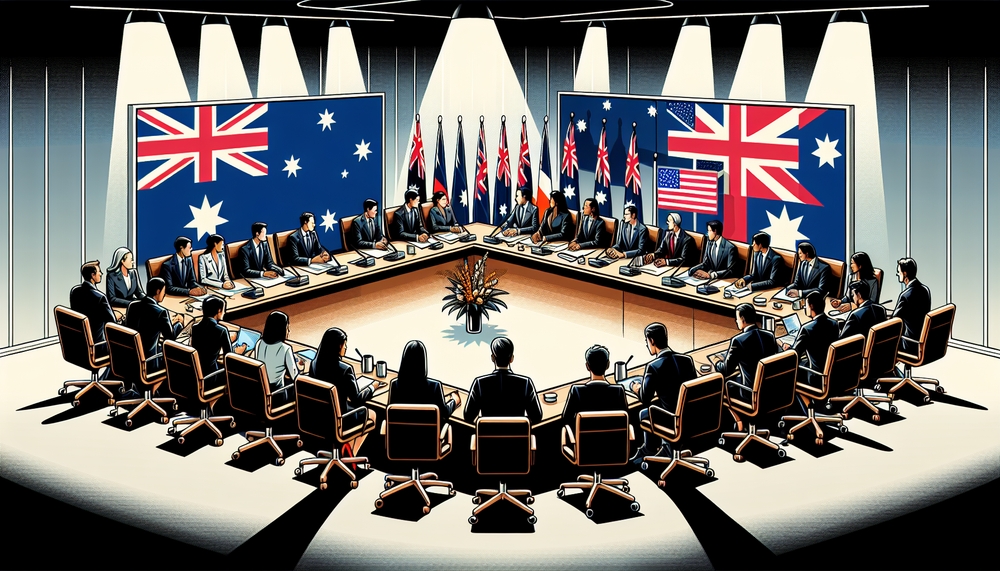
The Diplomatic Stir in Washington
Australia’s foreign affairs minister, Penny Wong, has successfully navigated the intricate waters of US diplomacy, evidenced by her recent visit to Washington. As Australia’s geopolitical landscape shifts, the need to fortify alliances has never been more pressing, especially with the lurking threat posed by China. This urgency was palpable in Wong’s first visit under a conservative US administration led by Donald Trump, where she not only attended the inauguration but also secured a pivotal meeting with the US Secretary of State, Marco Rubio.
Rubio, a figure with deep reservations about China, had earmarked the AUKUS pact as a keystone for countering Beijing’s growing influence. This alignment with US strategic priorities couldn’t be timelier for Canberra as the nation realigns its diplomatic, security, and economic interests around the unpredictable currents of US politics.
Rubio’s Undeterred Stance on China
Amidst the tumult of US partisanship, Rubio stands as a beacon of continuity. His history as an anti-communist, driven by his Cuban heritage, naturally predisposes him to take a firmer stance against China. This perspective aligns harmoniously with Australia’s strategic concerns in the Indo-Pacific. His unanimous Senate confirmation illustrates his ability to bridge bipartisan divides, further fortifying his role as a crucial ally for Australia.
In previously polarized times, Rubio’s adeptness at navigating political divides offers Australia a glimmer of hope and stability. His innate ability to cooperate across party lines is a reassuring indicator, especially as Australia looks to maintain a steady partnership with the US.
The Trump Factor: A Challenge to Predictable Policy
However, the shadow of unpredictability looms large with Trump at the helm. Known for his erratic foreign policy moves, Trump’s position could either consolidate or complicate US-Australia strategies against China. While Trump’s initial hardline stance on China catalyzed bipartisan support, there remain incongruences, particularly Trump’s trade-focused view contrasting Rubio’s hawkish approach.
The Australian government finds itself straddling a delicate diplomatic act, balancing support for AUKUS—a military alliance viewed as vital by the US—with the need to mitigate direct antagonism towards China. Former Prime Minister Scott Morrison aptly captured this sentiment, noting that while AUKUS is crucial for curbing their strategic rival, much depends on how overtly Australia aligns itself with US objectives.
Australia’s Tactical Diplomacy Amidst Rising Tensions
Australia’s diplomatic engagement with the US reflects a broader understanding that, despite tumultuous leadership styles, there is enduring value in the pillars of diplomatic, defense, and intelligence cooperation. This reality underscores why Canberra remains committed to bolstering the US alliance even as Trump’s erratic nature and unconventional diplomatic methods threaten to dilute the relationship’s steadiness.
Moreover, understanding the dynamics at play, Australia must brace itself for potential fluctuations in US-China policy under Trump, whose administration historically vacillates between dialogue and confrontation. Whether Australia finds common ground with Rubio’s approach or navigates Trump’s diplomatic eddies remains to be seen, but its strategic imperative in the Indo-Pacific remains unaltered.
The Future of AUKUS: Strategic Deterrence or Diplomatic Dilemma?
AUKUS stands as a definitive element of Australia’s military strategy, providing a framework for deterrence against China’s assertiveness. The partnership with the US not only enhances Australia’s defense capabilities but also aligns with US interests in maintaining strategic military superiority in the region. However, as current Prime Minister Anthony Albanese weighs rhetoric versus reality, Australia’s stance will have to adapt to the changing tides of US foreign policy under Trump’s administration.
Ultimately, as Australia continues to forge a path in international diplomacy, it must carefully calibrate its efforts, ensuring it maintains robust relations with the US while strategically managing the formidable challenge posed by China. The geopolitical tapestry of the region demands such deft maneuvering—integrating cautious diplomacy with strategic foresight to safeguard national interests.