
Published
- 3 min read
BRICS vs G7: The Shifting Dynamics of Global Economic Power
The Rise of BRICS and the Challenge to G7 Dominance
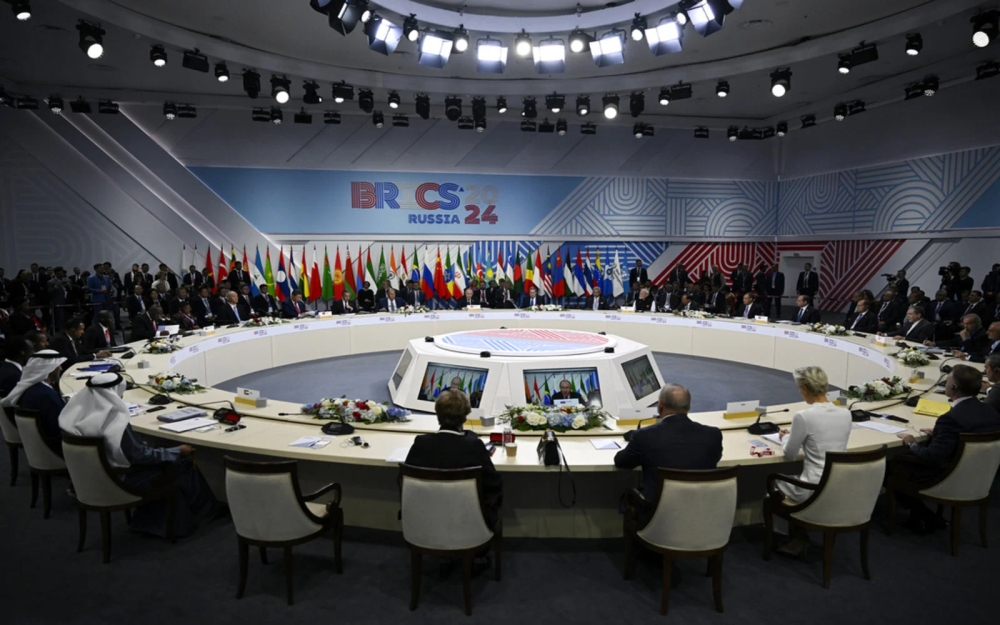
The global economic landscape is undergoing a seismic shift as the BRICS nations—Brazil, Russia, India, China, and South Africa—continue to challenge the long-standing dominance of the G7. This rivalry has intensified in recent years, particularly with the BRICS bloc’s push to reduce reliance on the U.S. dollar and establish alternative financial institutions. The 2024 BRICS Summit in Kazan, Russia, underscored this ambition, with member states reaffirming their commitment to creating a multipolar world order.
De-Dollarization: A Strategic Move by BRICS
One of the most significant developments in this geopolitical tug-of-war is the BRICS nations’ concerted effort to de-dollarize global trade. The U.S. dollar has long been the world’s primary reserve currency, but its role as a “weapon” in international politics has drawn criticism from leaders like Russian President Vladimir Putin. BRICS countries have been actively exploring alternatives, including the creation of a new BRICS currency, to reduce their dependence on the dollar.
This move has not gone unnoticed by the United States. President-elect Donald Trump’s recent declaration that countries abandoning the dollar would face “100 percent tariffs” highlights the growing tension between the two blocs. Trump’s protectionist policies, including proposed tariffs on Canada, Mexico, and China, further complicate the global economic landscape and raise questions about the future of the dollar’s primacy.
The Economic Heft of BRICS vs G7
The economic power of the BRICS nations has grown significantly over the past two decades. In 2024, BRICS countries account for 34.9 percent of global GDP in terms of purchasing power parity (PPP), surpassing the G7’s 30.05 percent. This shift represents a dramatic change from the early 2000s when the G7 dominated the global economy with a 43.28 percent share compared to BRICS’ 21.37 percent.
This economic rise has enabled BRICS to establish parallel financial institutions, such as the New Development Bank (NDB) and the Asian Infrastructure Investment Bank (AIIB), which challenge the prominence of Western-led organizations like the International Monetary Fund (IMF) and the World Bank. These institutions reflect BRICS’ broader goals of creating an alternative financial system, coordinating economic policy, and seeking greater representation in global governance.
Geopolitical Faultlines Within BRICS
Despite their shared objectives, the BRICS nations are not without internal tensions. Security and geopolitical rivalries, particularly between China and India, pose significant challenges to the bloc’s cohesion. The 2020 Galwan border clash, which resulted in the deaths of 24 soldiers, has strained Sino-Indian relations and led India to deepen its ties with the United States. This shift was evident during Indian Prime Minister Narendra Modi’s 2023 state visit to Washington, which resulted in major defense cooperation deals between the two countries.
The recent inclusion of Middle Eastern states like Iran, Egypt, and the UAE in BRICS has further complicated the bloc’s dynamics. Regional rivalries, such as the ongoing tension between Saudi Arabia and Iran, raise questions about BRICS’ ability to maintain unity and pursue common goals. Saudi Arabia’s cautious approach to the 2024 BRICS Summit, where its foreign minister attended only the final day, underscores the challenges of managing such a diverse group of nations.
The Future of BRICS and G7 Relations
As the BRICS nations continue to rise, the G7 faces the challenge of maintaining its relevance in a rapidly changing world. The return of Donald Trump to the White House, with his isolationist policies and protectionist rhetoric, adds another layer of uncertainty to this geopolitical rivalry. While some analysts view BRICS as a potential challenger to the G7’s dominance, others remain skeptical, pointing to the bloc’s internal divisions and the economic limitations of its member states.
The coming years will be crucial in determining the trajectory of this global power struggle. Whether BRICS can overcome its internal challenges and establish a viable alternative to the G7-led order remains to be seen. What is clear, however, is that the dynamics of global economic power are shifting, and the world is witnessing the emergence of a new multipolar order.